Event Alert!Attend the 10th Annual Seniors' Information Fair!🗓️ Date: October 30, 2026🕤 Time: 9:30 A.M. to 2:00 P.M.📍 Location: The Beaumont, 11 Hillary Terrace, ClarenvilleEnjoy a presentations and numerous vendors devoted to seniors' services. Plus, there's a light lunch and prize giveaways!ADMISSION IS FREEDon't wait to register and receive your FREE tote bag. To sign up, please contact Brenda at 709-466-2870 on or before October 19, 2026.Please Note: The Fair is a Scent-Free Environment. ...
Town of Port Blandford – Fall 2026 Newsletter is Here!Check out our full Fall Newsletter attached for important community updates, seasonal maintenance schedules, and upcoming community events! ...
One of the earliest accounts of the area comes from William E. Cormack who trekked across Newfoundland in 1822 with Sylvester Joe (an aboriginal guide) seeking to enter into peaceful conversations with the Beothuk. He describes crossing the “Clode Sound River,” and based on the description, it was Southwest River. The guide explained to Cormack that the Mi’kmaq used to canoe up the river looking for salmon. In the 1839, a geological study describes Clode Sound as having no permanent inhabitants, but there were old winter houses (tilts) that provided shelter for people logging timber. A line was cut through the forest from Shoal Harbour near Clarenville to Clode Sound in 1867 as part of a Newfoundland Government initiative to provide overland mail delivery on the island.
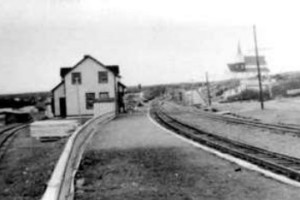
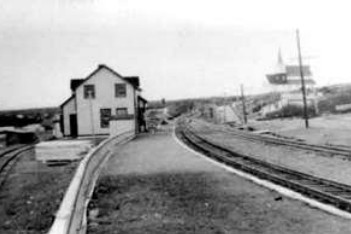
Old Railway Station
The first significant development of the community happens in 1892 with the building of the railway and the installation of a wharf at Clode Sound to accommodate a coastal steamer for Bonavista Bay to facilitate travellers, carry freight and increase trade. A railway station and telegraph office is completed, several business operations such as sawmills are established and a population of 47 men (women and children were not included in early publications) is listed for Clode Sound in 1894.
The first decade of the 1900’s saw exponential growth. The community was assigned as the home port for the new coastal steamer S.S. Dundee, mastered by Captain Darius Blandford. Clode Sound included what is modern day Charlottetown and Bunyan’s Cove, and people of this part of the bay referred to the community as Port Blandford after Captain Blandford. As part of an amendment to the Post Office Act in 1902 due to a number of communities changing their names, Port Blandford is listed for the first time as its own community. By 1908, it is documented that there are 2 churches (Episcopal and Methodist), 2 stores, 2 hotels, 2 lumber mills, 1 newspaper office (The Telegrapher published by William Coaker), a telegraph and express office, and a population of about 300.
The community continued to grow throughout the decades and became a commercial centre for area. After Newfoundland joined confederation in 1949, there was significant development in the area that started the change of the traditional industries. The first national park in the province (Terra Nova National Park) was established on the border of the community in 1957, which removed some of the traditional logging areas. In 1965, the Trans Canada Highway created a link to Clarenville, which was a commercial centre that was growing in Trinity Bay. Since that time, the commercial importance of Port Blandford started to decline as many residents started working in the Clarenville area and high school students were bused to the regional school.
In 1971, the Town of Port Blandford was officially incorporated and the community council started work on road developments and installing water and sewer services. It also played a role in working with Terra Nova National Park in creating the nine-hole Twin Rivers Golf Course along Northwest River. The last traditional industry from the early years of the community saw its end in 1988 with the closure of the railway. By the early 1990’s, tourism started to become the primary industry in the community. With the building of the St. Christopher’s Hotel (now Terra Nova Golf Resort), the expansion of Twin Rivers as a championship 18-hole golf course, the addition of the nine-hole Eagle Creek golf course and development of a variety of accommodations, Port Blandford became a tourism destination on the east coast of the province.
Today, the community is home to a variety of residents including young families, people working in local industries like tourism, energy and service, commuters to mainland Canada like Alberta, and a growing number of retirees who move to the community for recreational and natural environment.